
English| EUR
Suggested for you
More currencies
Choose a language
A Santiago food tasting tour moves through the city's working markets, neighborhood eateries, and traditional picadas, sampling Chilean cuisine at the source. Most tours run three to four hours and cover multiple districts. This guide explains what you'll encounter, which routes operators typically follow, and how to prepare.
Quick answer
A Santiago food tasting tour typically lasts three to four hours and visits four to six tasting stops across neighborhoods like Mercado Central, Barrio Italia, or Barrio Bellavista. Tours operate during daylight hours, generally between 09:00 and 17:00, to align with market activity and restaurant lunch service. Most run Thursday through Sunday when vendors and kitchens are at full capacity, though private tours can sometimes accommodate other days.
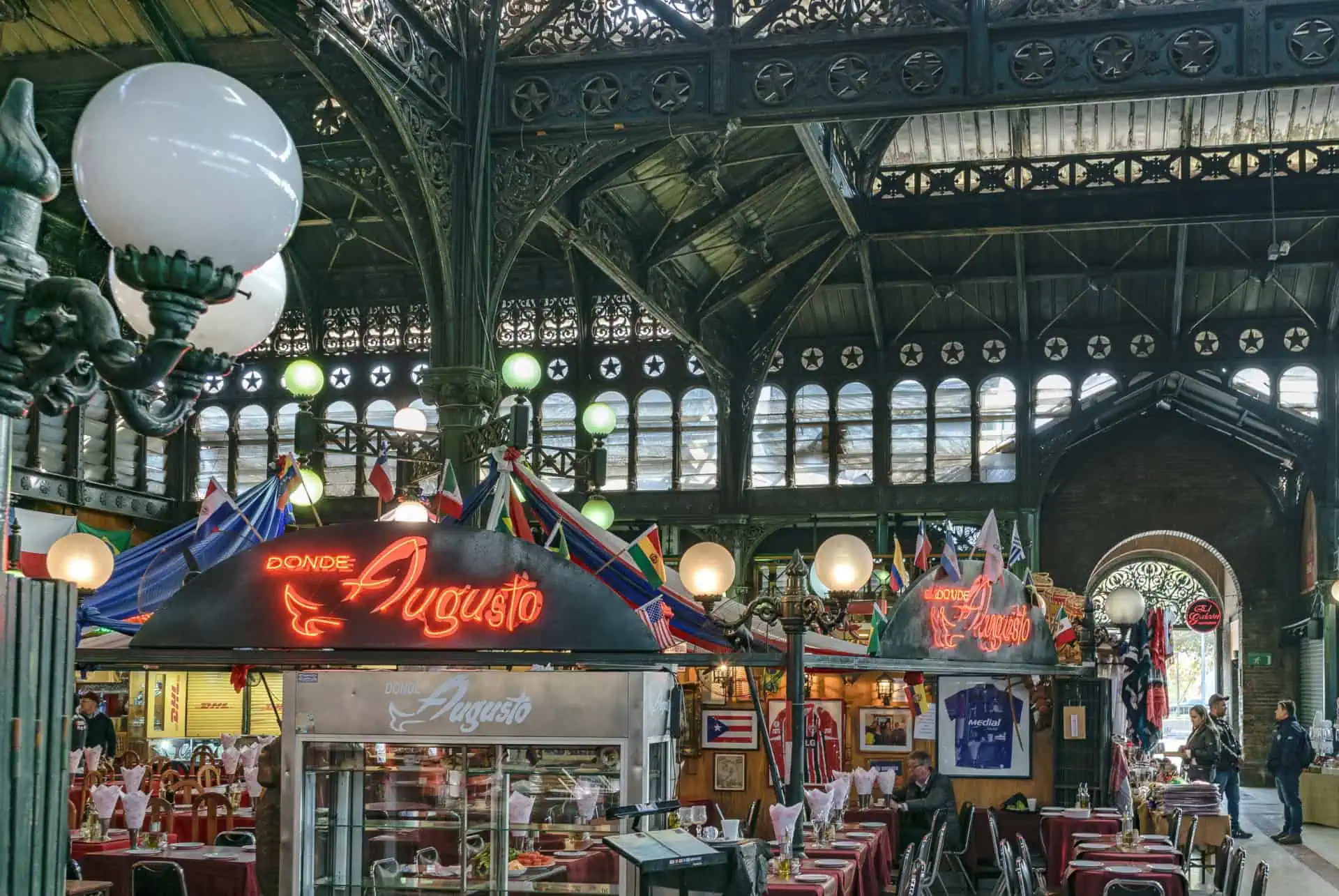
Santiago's culinary identity was built in market stalls and corner fondas before fine dining arrived, and tasting tours reflect that lineage. A guided food walk through the Chilean capital prioritizes authenticity over spectacle: empanadas pulled from wood-fired ovens at neighborhood bakeries, completo hot dogs assembled at century-old fuentes de soda, fresh seafood at Mercado Central where fishmongers still shout prices at dawn. These are working venues, not curated tasting rooms. Most Santiago food tasting tours follow one of three route templates. The classic market circuit begins at La Vega Central or Mercado Central, where guides explain Chilean produce vocabulary and the difference between congrio, reineta, and corvina before moving to a churrascaria for grilled beef and a pisco sour demonstration. The Barrio Italia route leans contemporary, linking independent cafés, artisan chocolatiers, and natural wine bars within a compact walkable zone. Bellavista tours combine traditional pebre and pastel de choclo with pisco tastings at distillery showrooms. Operators typically limit groups to eight or twelve guests to preserve access to small kitchens and counter seating. Tour logistics hinge on Santiago's meal rhythm. Lunch service peaks between 13:00 and 15:00, and most operators schedule departures for late morning to catch markets at their liveliest before transitioning to sit-down tastings. Afternoon tours start around 15:00 and extend into early evening, overlapping with once, the Chilean tea-and-pastry tradition. Tours operating on weekends encounter heavier foot traffic at markets but gain access to vendors who close midweek. Private operators can arrange morning-only or evening-only itineraries, though availability narrows outside standard windows. The Chilean palate favors bold, unadorned flavor: merkén spice on grilled meats, pebre salsa with every bread basket, seafood preparations that rely on olive oil and lemon rather than complex sauces. Guides contextualize these choices within Santiago's geography and agricultural calendar, pointing out Andean ingredients and coastal imports. Participants walk two to three kilometers over the tour duration, with frequent stops that break the distance into manageable intervals. Comfortable footwear and an empty stomach are the only real prerequisites.
“Santiago's culinary identity was built in market stalls and corner fondas before fine dining arrived, and tasting tours reflect that lineage.”
The best time for a food tasting tour in Santiago is during the daylight hours, specifically within the best arrival window of 09:00–17:00. This timeframe ensures optimal access to local markets and street food vendors while they are fully operational.
Mild, 12°C–22°C
Spring offers pleasant walking conditions for visiting outdoor food stalls and central markets.
Cool, 10°C–20°C
Autumn provides clear skies and comfortable temperatures for exploring culinary districts on foot.
—
Mornings are ideal for experiencing the peak freshness of produce markets before afternoon congestion increases.
Verdict: The best period for a food tasting tour is during the spring months of September to November, arriving within the 09:00–17:00 window.
The Santiago food tasting tour operates on a consistent schedule throughout the week. Please note the specific availability for these guided experiences.
Santiago food tasting tours meet at various locations throughout Santiago, Chile. Most meeting points are situated in central districts accessible via the city's public transport network.
Line 1 (Red) to Baquedano or Universidad Católica station
Direct to central meeting point
Walk to designated landmark within central Santiago
Plan to arrive within the best arrival window of 09:00–17:00 to ensure your meeting point is accessible during standard market and restaurant operating hours.
Most Santiago food tasting tours run three to four hours, designed for travelers who want to sample local cuisine across multiple neighborhoods without planning logistics themselves.
Tours typically begin at Santiago's central market, where guides introduce Chilean seafood traditions and vendors offer samples of fresh ceviche and empanadas—budget 45 minutes for this stop.
A short walk through this historic neighborhood connects market and café stops, with guides pointing out murals and colonial architecture along the way.
Groups pause at a local bakery to taste sopaipillas or alfajores with Chilean coffee, usually spending 20–30 minutes before continuing.
The tour concludes at a sit-down restaurant in Lastarria, where participants share a meal featuring dishes like pastel de choclo or cazuela—allow 60–90 minutes for this final course.
Pack light and prepare for several hours of walking between tasting stops across Santiago's neighborhoods.
Everything you need to know about santiago food tasting tour
A santiago food tasting tour typically involves visiting local markets and restaurants to sample traditional Chilean dishes. You will explore local flavors, such as empanadas, fresh seafood, and Chilean wines, while learning about the city's gastronomic history. Most experiences involve walking between venues to discover hidden gems in the city center.
Most operators can accommodate dietary restrictions if notified in advance of your booking. It is recommended to communicate any allergies or preferences when finalizing your reservation to ensure the guide can make appropriate arrangements. This allows for a more inclusive and enjoyable culinary exploration of the city.
The best arrival window for a santiago food tasting tour is 09:00–17:00. These hours are ideal because they align with the peak activity times for local markets and traditional eateries. Tours typically operate during these daylight hours to ensure full access to fresh ingredients and restaurant facilities.
Children are generally welcome to join a santiago food tasting tour, provided they are comfortable with a walking-intensive itinerary. It is best to verify age policies with specific operators, as some tours may have recommendations based on the amount of walking or the nature of the menu. These outings can be a great way to introduce younger travelers to local culture through cuisine.
The entry fee is 0 CLP for the service itself, as this is a tour service rather than a fixed attraction with a public entrance ticket. You will instead book a spot on a curated experience through a provider. Please check individual operator platforms to see the cost associated with their specific tour packages.
Booking in advance is highly recommended to secure your place, as group sizes for a santiago food tasting tour are often limited to maintain a high-quality experience. Popular time slots can fill up quickly, especially during peak travel seasons. Reserving your spot early ensures you have access to your preferred itinerary and date.
Santiago Culinary Tours
Read more Tickets & toursSantiago de Compostela Food Tours
Read more Tickets & toursSantiago Chile Food Tours
Read more GuideSantiago Airport Food Options
Read more GuideSantiago Food and Wine Tours
Read more GuideSantiago Walking Food Tours
Read more Tickets & toursSantiago Street Food Tours
Read more