7 hr 30 min
Santiago Island Discovery with Local Flavors & Tarrafal Beach
Explore Santiago's highlands, taste authentic Cape Verdean treats, and unwind at pristine Tarrafal Beach
Reserve
Hand-picked by our editors — only the best 5 experiences from 12 reviewed.
Verified partners for every tour, free cancellation where available, and instant confirmation on every booking.
7 hr 30 min
Explore Santiago's highlands, taste authentic Cape Verdean treats, and unwind at pristine Tarrafal Beach
Reserve
8 hr
Full-day exploration of Cape Verde's largest island with mountain vistas, beach time, and cultural immersion
Reserve
4 hr
Discover Cape Verde's vibrant capital and its first UNESCO site on a half-day cultural journey
ReservePrices from verified partners. Availability updates in real time at checkout. Free cancellation policies apply where shown.
The landmarks, rooms, and views travelers on this tour remember — all visible on a single visit.
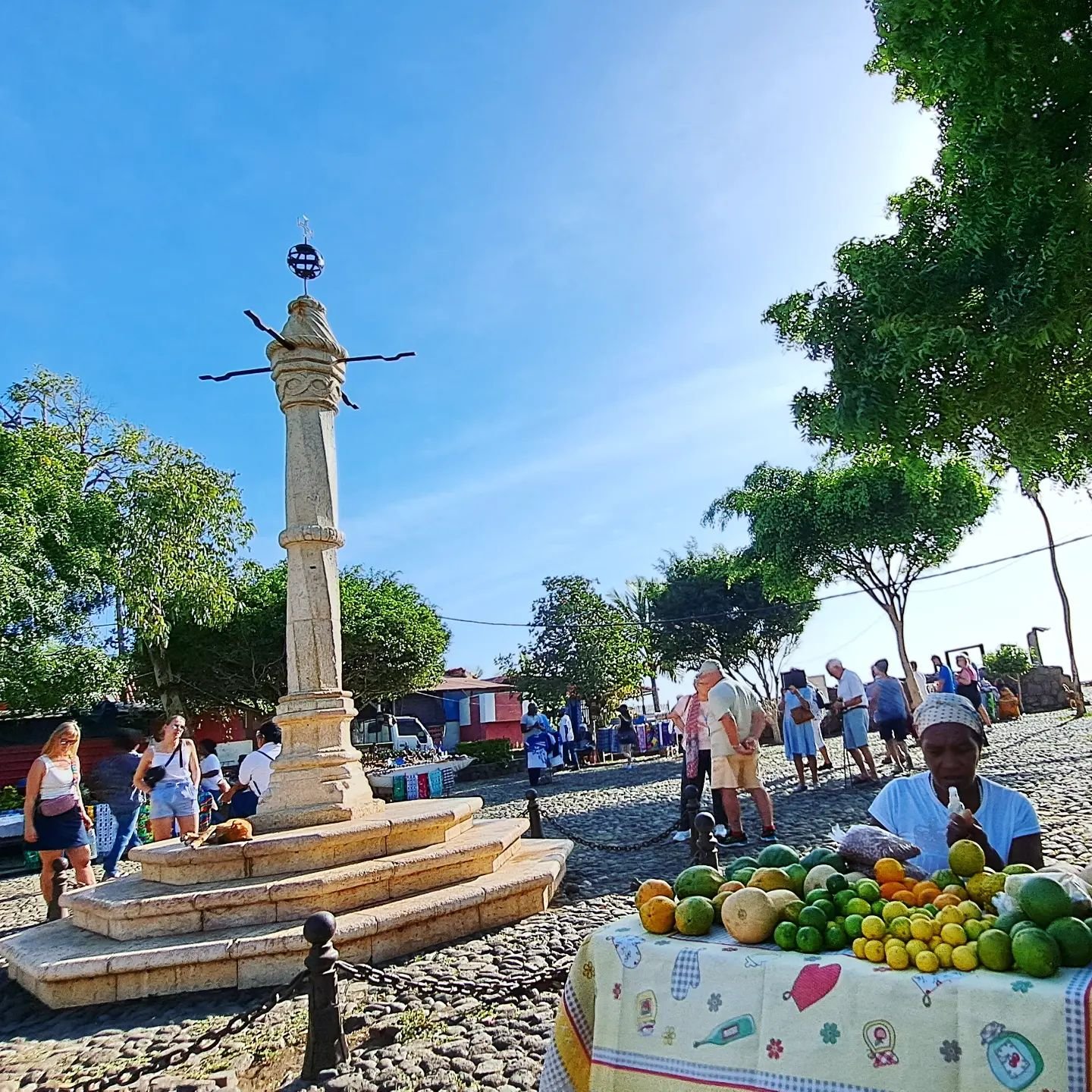
Experience the vibrant colors of fresh tropical fruits and locally grown vegetables found in this central Cape Verde landmark.
Discover the fragrant spices used in traditional island cooking during your santiago street food tour.
Sample authentic street foods and delicacies prepared fresh in the heart of the Plateau district.
Browse handmade goods and souvenirs located near the main food stalls of this historic market.
Admire the preserved architecture surrounding the market square which highlights the city's historical significance.
They complement each other; most visitors who do both find that the independent experience offers more freedom, while the guided culinary excursion provides greater convenience. The santiago street food tour serves as an excellent introduction to local markets, whereas the broader island trip deepens one's knowledge of rural agriculture.
| Feature | Top pick Santiago Street Food Tour | Full-Day Island Culinary Tour |
|---|---|---|
Flexibility |
Self-paced exploration | Fixed schedule |
Depth of Cuisine |
Focused on local market snacks | Island-wide traditional gastronomy |
Logistics |
Independent planning | Guided transportation included |
Price |
0 CVE entry fee | 12,500 CVE per person |
Time Commitment |
1.5–3 hours | 8 hours |
Transit |
Walking required | Vehicle-based tour |
| See tickets → |
Verdict: Choose the santiago street food tour tickets for a casual morning in Praia, or book the island-wide santiago street food tour tour for a comprehensive deep dive into Cape Verdean culture with santiago street food tour tours available for larger groups.
Choose your ticket, select your date, and reserve in under two minutes. Secure checkout handled by our verified partner.
Instant confirmation by email, with a mobile voucher you can save offline. No printing, no queuing at a collection desk.
Arrive at the entrance, show your voucher on your phone, and walk in. Most tickets include priority or skip-the-line access.
Practical details for your visit straight from our verified partners — hours, access, rules, and how to get there.
Plateau, Praia, Santiago Island
Main entrance near the produce section
Most efficient way to reach the Plateau from the airport or beach areas
Accessible if staying in the central Plateau district
Casual and comfortable clothing is recommended for navigating the bustling Plateau area. Wear sturdy walking shoes to handle uneven pavement.
Keep your belongings secure and in front of you while exploring crowded market aisles. Avoid bringing large backpacks or unnecessary valuables.
Street photography is generally welcomed, but always ask vendors for permission before taking close-up portraits. Respect local privacy during your santiago street food tour experience.
The market areas are primarily on flat ground, though sidewalks in the Plateau district can be narrow or uneven. Wheelchair users may require assistance in high-traffic sections of the santiago street food tour.
Mobile phones are permitted for capturing photos and navigating the city. Ensure your device is fully charged to use local map apps during your santiago street food tour.
Families are welcome, but be aware that the market can get busy during the morning peak. Keep children close at all times while walking between stalls.
This santiago street food tour allows you to sample local delicacies directly from street vendors. Always carry bottled water and hand sanitizer when consuming local snacks.
Pets are not permitted inside the indoor market facilities. Service animals are generally accommodated, provided they are clearly identified.
The santiago street food tour operates primarily in public spaces. Stay hydrated and monitor the sun intensity, especially during midday.
Plateau, Praia, Santiago Island
Main entrance near the produce section
Get directionsBest time to go, insider tips, nearby landmarks, and the cancellation fine print — flip through to skim what matters to you.
How crowds, weather, and events shift across the year.
March to May offers pleasant temperatures for walking around the island. It is an excellent time for a santiago street food tour without extreme heat.
June to August brings warmer weather and more local events. Expect busier crowds at this Cape Verde landmark.
September to November features mild temperatures. This season is ideal for a Santiago food and cultural tour.
December to February provides the coolest conditions of the year. Visitors often prefer this window for a guided santiago street food tour.
Small details that turn a good visit into a great one.
Vendors often prefer small denominations of Cape Verdean Escudos for transactions.
This traditional stew is a staple you must sample during any santiago street food tour.
Following the 08:30–11:30 arrival window ensures you see the market at its most active state.
Many vendors are happy to offer a taste of their goods before you purchase.
The tropical sun can be intense even in the morning, so keep water on hand.
Non-bookable sights within a short walk — free to visit, easy to pair.
The historical center of the city featuring colonial architecture and street markets.
An iconic building showcasing neoclassical architectural influences in the heart of the city.
A central square perfect for resting after your santiago street food tour experience.
A prominent church located within the walkable historic district of Praia.
Flexible, no hidden fees.
Full refunds are available for cancellations made 24 hours prior to the scheduled start time. No refunds will be processed for no-shows or late cancellations.
Hand-picked options within walking distance — pick a district for vibe, or a specific hotel for convenience.
High-end hotel with ocean views and proximity to the city center.
Located directly in the Plateau, ideal for easy access to the santiago street food tour.
Reliable accommodation with modern amenities near the main city landmarks.
Mercado Municipal in Plateau opens at eight each morning, and by half past the air is thick with charcoal smoke, dried fish, and the yeast tang of fresh pastel. The two-story colonial market building, erected in 1949, remains the nerve center of Praia's daily food economy — fishermen unload wahoo and grouper at the eastern entrance while women in floral capulanas arrange pyramids of papaya, sweet potato, and manioc under corrugated tin awnings. Cape Verde's cuisine evolved from centuries of transatlantic trade: Portuguese colonizers introduced wheat and wine, West African slaves brought okra and palm oil, and Brazilian ships deposited cassava and black-eyed peas. The resulting Creole repertoire is spare and precise — cachupa, the national dish, is a slow-cooked stew of hominy corn, beans, and whatever protein the day affords, served at breakfast with a fried egg or reheated at dinner with linguiça sausage. A Santiago street food tour begins where the city begins: at the intersection of African root vegetables and Atlantic fisheries. The Plateau district, Praia's colonial heart, climbs eighty meters above the harbor and houses the market, the presidential palace, and a grid of pastel-painted balconies where street vendors set up portable grills at dawn. Tuna steaks are seared over acacia wood and served on a square of pão with malagueta chili oil. Pastel — a half-moon pastry stuffed with spiced tuna or cheese — fries in vats of palm oil until the dough blisters gold. Grogue, the local sugarcane spirit, is distilled in the island's interior valleys and sold in recycled Coca-Cola bottles at market stalls, though most vendors reserve it for late afternoon when the heat softens. The morning window between eight-thirty and eleven-thirty captures the market at peak turnover — fishermen have returned, bread has emerged from wood-fired ovens, and the day's vegetables are still crisp. By noon, the tuna is gone and vendors begin packing crates. The surrounding streets hold smaller discoveries: women frying bolinhos de mandioca at folding tables, men roasting corn over oil drums, and the occasional tray of doce de coco passing hand-to-hand in the shade. These culinary walking tours through Praia's Plateau district offer a window into a food culture that remains functional rather than ornamental, where eating is social infrastructure and every transaction carries the cadence of negotiation. The city's restaurants serve cachupa rica and lagosta grelhada, but the street is where Cape Verdeans eat daily, and where the grammar of Creole cooking is spoken plainly.

"By half past eight the air is thick with charcoal smoke, dried fish, and the yeast tang of fresh pastel."
A step-by-step walkthrough of the visit — what you'll see, how long each stage takes, and the details that matter.
You arrive at Mercado Municipal's main entrance on Avenida Amílcar Cabral by eight-thirty, when vendors are still stacking crates and the morning light slants through the building's iron trusses. You walk the perimeter first — fish on the east side, produce in the center, spices and dried goods along the western wall. A vendor offers you a wedge of queijo de cabra, the island's sharp goat cheese, and you take it with a piece of bolo de milho, sweet cornbread baked in a wood oven before dawn. You follow your guide into the adjacent streets, where a woman fries pastel in a dented aluminum pot balanced on a gas burner. The pastry is hot enough to burn your tongue, the tuna filling sharpened with garlic and lime. Two blocks north, a man grills tuna steaks over an oil-drum grill, brushing each side with palm oil and malagueta paste. You eat standing at a folding table, the fish layered onto dense pão and topped with pickled onions. By ten-thirty you've circled back to the market's interior, where a cachupa vendor ladles the breakfast stew into a ceramic bowl — hominy, kidney beans, sweet potato, and shredded mackerel, crowned with a fried egg. The texture is porridge-thick, the flavor built on hours of slow cooking. You finish with a shot of grogue and a square of doce de papaya, the sweetness cutting through the salt and smoke.
The market area is open Monday through Friday from 08:00–18:00 and Saturday from 08:00–13:00, remaining closed on Sunday. You can plan your visit around these hours to ensure shops are open.
Most of the Plateau area is accessible, but please note that some narrow market aisles may be challenging during a santiago street food tour. We recommend checking specific routes in advance.
Bring comfortable walking shoes, sun protection, and enough cash for your food purchases during the santiago street food tour.
No entry fee is required for the public area, though booking a guided santiago street food tour tour through an operator is recommended to secure a spot.
The best arrival window is 08:30–11:30 to experience the market at its peak morning activity levels.
Yes, families are welcome, provided children are supervised while navigating the bustling street food vendors.
Cancellations made at least 24 hours prior to the scheduled tour receive a full refund, while later cancellations are non-refundable.
Yes, photography is permitted, but please be respectful and ask vendors for permission before capturing their stalls.
Yes, you can easily visit the nearby Palácio Presidencial or Praça Alexandre Albuquerque after your santiago street food tour.